
Puerto Rico, Georgia, North Carolina, & Virginia
5/1/2026 | 46m 46sVideo has Closed Captions
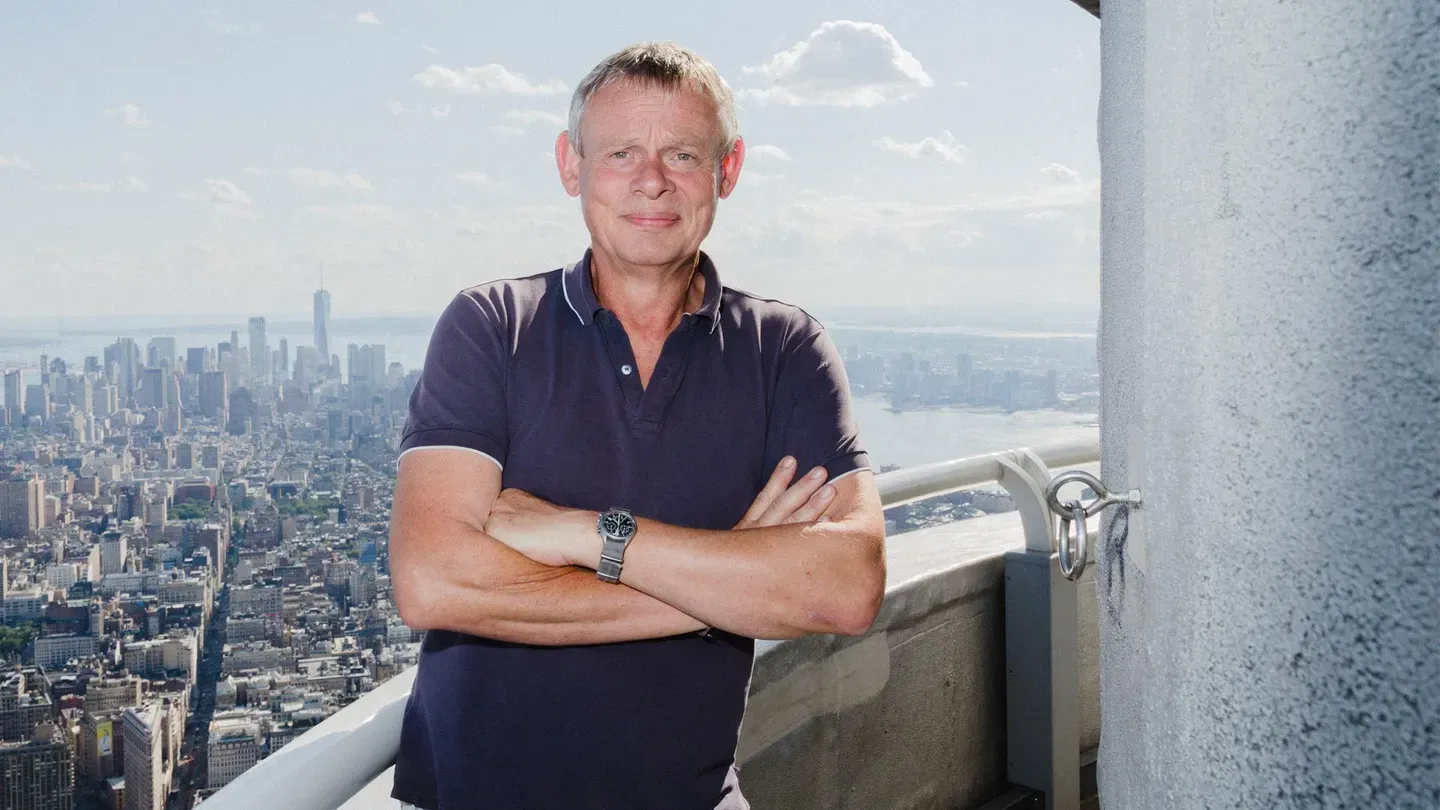
Martin enjoys Puerto Rico before heading to Georgia and the Outer Banks of North Carolina.
Martin enjoys salsa dancing and rum in Puerto Rico before heading to the Sea Islands in Georgia. On the Outer Banks of North Carolina, Martin learns about Roanoke before traveling to Chincoteague, Virginia, to watch the wild ponies swim.
Problems playing video? | Closed Captioning Feedback
Problems playing video? | Closed Captioning Feedback
Martin Clunes: Islands of America is presented by your local public television station.
Distributed nationally by American Public Television
Puerto Rico, Georgia, North Carolina, & Virginia
5/1/2026 | 46m 46sVideo has Closed Captions
Martin enjoys salsa dancing and rum in Puerto Rico before heading to the Sea Islands in Georgia. On the Outer Banks of North Carolina, Martin learns about Roanoke before traveling to Chincoteague, Virginia, to watch the wild ponies swim.
Problems playing video? | Closed Captioning Feedback
Where to Watch Martin Clunes: Islands of America
Martin Clunes: Islands of America is available to stream on pbs.org and the PBS app.
Providing Support for PBS.org
Learn Moreabout PBS online sponsorship(dramatic music) - [Narrator] Everyone has an image of America.
A land of big shops and bright lights.
Of asphalt highways stretching right across the continent.
But there's another America, and I'm going to find it.
Dotted around this nation's shores are many thousands of islands that also fly the stars and stripes.
To discover them, I'm going on a 10,000 mile island hopping journey, looping around the USA from west to east.
Really beautiful, isn't it?
From Hawaii's islands of fire to Alaska's islands of snow and ice.
From California's secret marine paradise.
This is unbelievable.
To the people playgrounds off the New England coast.
Along the way, I'll see nature at her most spectacular.
I'll encounter the animals that inhabit these far-flung places.
Oh, hello.
Oh boy.
There's my first white shark.
And I'll be meeting people who live in their own sea bound worlds.
Each with their own identity.
- I'll find the deep spots for you.
- Thank you.
(singing in foreign language) - And their own unique story.
So if you want to see a different USA, come with me and discover the Islands of America.
(dramatic music) (dramatic music) Puerto Rico.
It's easy to forget that this colourful Caribbean island belongs to the USA.
It's not a full blown state, but its people are American citizens.
And yet Puerto Ricans are also proud to be different.
They're a blend of Native Tino Indians, Spanish, and African roots.
Like a jewel at the heart of the Caribbean, Puerto Rico is America's third largest island, and the only one where Spanish is the main language.
It's known for good reason as La Isla del Encanto, the Isle of Enchantment.
But recently, it's been having a terrible time.
(dramatic music) On the 20th of September, 2017, hurricane Maria ripped right through Puerto Rico.
It was the worst disaster in the island's history, flattening forests and houses, and ultimately claiming thousands of lives.
But today, if you wander through the streets of the 500 year old capital San Juan, you can't help noticing the pulsating energy that sustains these islanders through their long, painful recovery.
If I were to sum up that energy in one word, it would have to be salsa.
(upbeat music) Salsa describes both this joyous type of music and the dance style that goes with it.
(upbeat music) Salsa is a blend of many musical influences from Cuba to New York.
But as every Puerto Rican will tell you, this island was key to salsa's creation.
And nobody's more passionate about it than Tito Atos.
One of Puerto Rico's finest salsa teachers.
(audience applauding) Fantastic.
But can Tito show me how it's done?
My turn now?
- It's gonna be very, very, very easy.
- You know, I picked a lot up just watching.
I just soaked it all up.
- [Tito] You got it already?
- I'm like a dancey sponge.
- [Tito] Yes.
- We're gonna start one, two, three, we pause at four, then we go five, six, seven, we pause at eight.
So we do six steps in a eight beat count.
- That kind of pause that, that's where, that's where the, the grace and the upper body comes.
- Yeah because when we dancing on the one, we are gonna hit, always that downbeat of the missing temp, so a slasa would be that, (vocalises).
And then pause, (vocalises).
- [Martin] With Tito's brilliant teaching and my obvious gifts, it doesn't take long.
- Five, six, seven.
One, two, three.
- I knew I was gonna be good at this.
- So that's, that's the first part.
- [Martin] I know I make this look easy, but it's just the first step in a rich, sophisticated art form that has special importance on this island.
In Puerto Rico, it's more than just dance and an expression of music, isn't it?
- When we talk about salsa, we talk about Puerto Rico.
We hear salsa on the car, having fun with some friends in a bar, or just in a house.
It's a music that always is around us.
- And is it important in a land that's an American territory to hang onto that identity?
- [Tito] Of course, yes, yes.
- 'Cause you could get lost in that huge American thing.
- Yeah, because, well, we, we proud also to be Americans, and be part of the, the United States.
But it's not something that we have to let go.
We gonna keep talking Spanish, we gonna keep dancing salsa, eating rice and beans, all of that, because that's make us Puerto Ricans.
- [Martin] I've heard there's more to discover on Puerto Rico besides dance and music.
Nicknamed the rum capital of the world, it produces 70% of all the rum drunk in the United States.
(upbeat music) Rum was once merely a byproduct of the sugar industry until local families realised they could build their fortunes and their grand hilltop mansions on the island's top tipple.
The Serrallés distillery makes the rum most Puerto Ricans drink.
Not the widely available brand we've all heard of, though, that's also made in Puerto Rico.
But its biggest local rival, Don Q. The man in charge is a sixth generation rum maker.
Roberto Serrallés.
I'm just so happy that in 2018 good things still are contained in oak barrels.
It seems so low tech, doesn't it?
- It does.
It is absolutely part of the tradit.. You have to put it in barrels, there's no shortcuts there.
- [Martin] In this hot climate.
Rum evaporates at a staggering 10% annually.
So most barrels aren't aged for more than a couple of years.
- Methods have not changed.
- [Martin] But for sentimental reasons, Roberto keeps one very special barrel.
- Yeah and it's 1989.
'cause that's the year I graduated from colle.. So I'm trying to figure out what I'm gonna do with it.
You know, we should have a party or something.
But, so it was 28 years old last year.
Now it's 29, so, and you can feel it, you know, there's not a lot left in there.
- How, where do you think, about there?
- About here.
And this, you know, is a, it's a kin.. It's got some, some, some.
We tried it about some months ago, It's quite woody.
- Is it?
- It's very, very Woody.
- [Martin] Puerto Rico's oldest family run distillery has seen generations of its employees through thick and thin.
Noel Garcia has worked here for 31 years.
He's an experienced barrel tapper, which is the traditional way to test a vintage rum.
Rums evolved a long way from the rough stuff pirates used to drink.
I can smell it already.
It's now a part of Puerto Rico's lifeblood, accounting for three percent of the island's tax income.
- You know, it's light, it's, I mean, this is just coming out of a barrel.
So it's a wild spirit that's been trapped inside of a barrel and coming out to breathe right now.
And that's cast strength, which had about 130 proof, plus or minus a couple degrees.
So, yeah.
So that'll grow some hair in your chest for .. - Yes, I'm nervous.
- [Roberto] Look at the colour though, so be.. - [Martin] Drinking 17 year old rum neat from the barrel won't do my taste buds or my liver any favours.
- Right, exactly.
- Pineapple juice, lime, coconut cream.
- [Martin] Much better to taste it in an upmarket take on Puerto Rico's most famous rum cocktail.
The pina colada.
- [Man] Voila.
- [Martin] Gracias, yeah.
Invented right here on the island in the 1950s.
It's now Puerto Rico's official national drink.
Oh, that's nice.
(dramatic music) Nearly a year on from Hurricane Maria.
Some Puerto Ricans are still struggling.
Yet in many ways, recovery is well underway.
The lush Caribbean jungle has certainly wasted no time in growing back.
And amongst these mangrove lined waterways, I'm hoping to see one of mother nature's most magical spectacles that somehow survived the terrible onslaught.
- I'm not sure if I like mangroves.
- Really?
- Well it's sort of crocodile, imp.. It's not, it's not land, it's not water.
It's threatening.
- It's threatening.
- [Martin] With the help of local guide Hector Negron.
What I've come to find is not in the mangroves, but in the water itself.
Before Hurricane Maria, this was one of the best places in the world to see a fragile but spectacular natural phenomenon called bioluminescence.
So listen, what's, what is bioluminescence?
- Bioluminescence is a natural wonder.
It is a type of plankton, dinoflagellates.
And it is a microorganisms that have the capability to burst into light.
They feed from sunlight and they also have animal characteristics at the same time.
- [Martin] Well, they are they like krill, tiny shrimp?
- No, no, they're gonna be microscopic.
To have an idea how big they are, you can fit three of them on the tip of a needle.
- Oh, okay, on the tip of, oh yeah.
There isn't, there's, there's no guarantee that we'll see them tonight or?
- There is a guarantee.
- Oh, there is?
- Yes.
- Oh, great.
- This is considered an active bio.. but have in mind that the dominant light is the one that we will perceive.
So we have to wait for total darkness in order to really speak out, yeah.
- [Martin] So we'll just wait in the spooky mangrove filled with voodoo until it gets done.
(Hector laughs) As night falls, my anticipation rises.
Flashes of lightning seem for a moment, like a bad omen.
But luckily no storm comes.
The creatures only shine for a brief moment when they're disturbed.
It's an effect that's notoriously difficult to capture on camera, but we'll try our best.
As our boat moves, we begin to see a glow around the outboard motors.
At last conditions are right for the best way to experience bioluminescence.
Full immersion.
Look at that!
Many other bio bays are too delicate for swimming.
But here the tiny glowing organisms thrive so well, it makes no difference.
Whoa, that's amazing.
What a great way to end my time on this exciting island.
It's wonderful to see how nature has recovered from the terrible hurricane.
The rainforest is regrowing and the good nature of the people just never went away.
(dramatic music) I am driving through America's deep south, the legendary land of cotton and Gone With The Wind, famed for its southern hospitality.
But it's also a land with a troubled past.
Before the Civil War plantation fortunes were built on the backs of African slaves shipped across the Atlantic in their millions.
On most plantations, their African languages and traditions were brutally suppressed and wiped out.
But that wasn't always true on a string of remote islands off the deep south's Atlantic shores.
And that's where I'm headed.
Running up the coast of Georgia and the Carolinas are more than a hundred sea islands.
Their home to the Gullah Geechee people.
Proud descendants of the African slaves who once lived here.
During the hot sticky summers, many plantation owners used to flee from their mosquito infested islands.
It gave the slaves enough freedom to preserve some of their African food, music, even language in a unique cultural fusion that survives to this day.
I've come to Hunting Island to meet the Gullah Geechee's elected leader.
Queen Quet has long been making sure their voice gets heard, from the White House to the United Nations.
Not only in English, but also in their own distinctive Gullah tongue.
Listen to this.
- (speaking in foreign language).
So if you really wanna know who we are, you come and you talk to one of us who are Gullah Geechie.
- I could sort of recognise, you know, the odd word 'cause it's the kind of, but it's not an accent or a, a patois really, it's a language.
- Gullah is its own language.
When I was in school, our teachers were trying to discourage us as teenagers from speaking our language.
They would literally beat it out of a lot of people.
And so we start thinking, well, it's bad.
So if you think it's bad, you start to feel like you are bad.
Because why is it that I speak this way and others don't?
Why is it that they don't like what I'm doing?
So a lot of Gullah Geechee's self-esteem was lowered.
And so now we see the reverse.
There's so much pride.
- There's a pride in, in these islands and this place and that identity.
- Absolutely.
So instead of taking on this feeling and .. of slavery, which is what was pounded into us, oh, your ancestors were slaves, instead of Africans who were enslaved, our Africans were (speaking in foreign language), and numerous other African ethnic groups.
Now that our people become aware of that, they're realising Gullah Geechee's are the amalgamation of all of that, they feel, oh, that we embody all of Mother Africa.
And how strong is that?
- Supernation.
- Yes, a super nation.
- [Martin] Not all Gullah geechee are the same.
Some are called Gullah, others geechee, and their dialects are different.
But they all face the same dilemma shared by so many island people.
How do you protect your traditional way of life when the pressure to embrace the tourist dollar becomes irresistible?
(dramatic music) Though many sea islands are now sprinkled with big hotels and resorts, I'm heading for a Geechee island community that's working hard to keep their heritage alive.
The only way on or off this island is by ferry and only if you arrange it ahead of time.
(dramatic music) Today most of Sapelo Island is covered with forest.
But back in the 18 hundreds it was planted with fields of rice, cotton, corn, and sugarcane.
The old plantation house still stands as a reminder of those days when the Spalding family shipped in 400 African slaves to work the crops.
The plantation owners have long since gone.
But the slave's descendants still live on Sapelo in the tiny village of hog hammock, population 70.
Resident Maurice Bailey can proudly trace his lineage back nine generations to a slave called Bilali, brought here from West Africa.
Nowadays it seems knowing your roots is a much greater source of pride than it used to be.
- At one point, you know, people didn't say they were from Sapelo.
They would try to get away from Sapelo, but now people always saying, I'm from Sapelo.
Yeah, that's my home.
So we are the last kind of true geechee community in the state of Georgia.
- [Martin] The trouble is, there aren't that many jobs in this remote spot.
So to help make ends meet the enterprising villagers have revived some rare heritage crops to sell on the mainland.
Sweet purple ribbon sugarcane and red peas brought by their ancestors from West Africa.
I've agreed to help Maurice harvest this field of red peas.
- So what, what we doing, these are the red peas.
So when they in the dry form like this, just when it's time to pull them off the bush, you can just take it like this and do it that.
- Not like a green pea back home, is it?
Quite a bit chewier.
As I quickly discover, it's a hot day for picking peas.
- [Martin] Don't pass out on me.
- Pass out on you, what are you saying?
- [Maurice] I don't want you to pass out 'cause you know we got a lot of unmarked graves out there, so we'll leave you out there.
- [Martin] Thanks very much.
- That's gonna take away from my day.
- [Martin] The good news is that fancy restaurants and delis across the US are beginning to place orders for Sapelo's red peas and purple sugar cane.
But will it be enough for these islanders to preserve their way of life?
- When we had a bigger population on island, 500 people, this was years ago, you know, we did everything on our own.
We raised everything.
We grew everything, we hunt, we fish, we shared with the neighbour if you had too much of this or that.
So we took care of each other.
But now we don't have a lot of those things.
So now we gotta rely on, we say the outside world.
It's a balancing act of how much outside influence you want.
If you get too much, then you destroy what cultures you have left.
- Yeah.
You don't want it turning into a tourist r.. - [Martin] No, no.
We love the tourists.
- Yeah.
- Because they bring income.
But at the same time, we know when that fair leaves they leaving too.
So that still give us our, our peace of life.
But yet still a lot of people come over and experience Sapelo.
- [Martin] And then bring their dollars with them.
- Bring their dollars with them, yeah.
Because that's all we want.
- Yeah.
You got enough friends.
- I got enough friends and cousins.
I'm trying to get rid of some of them.
- [Martin] Once the peas are picked, Maurice invites me on a fishing trip using methods that have been passed down through generations.
It's very much a team effort as Maurice's cousin Francine explains.
- Because we can't drag it on the ground, so we going pick it up and tote it.
And then we gonna start dragging out this way and we gonna make a circle and come in.
- So if somebody goes out deep.
- Yep.
- It's gonna be probably about three of them.
They gonna go out deep.
And either if you want to, we can stay on the shallow end or do you, if you want to, we can take you out on the deep end and we'll let two people come back on the shallow end.
- Oh, okay.
I don't mind, wherever I'm useful.
In water this warm a deep end plunge seems no big deal.
Except for one thing.
- [Man] We got sharks over there.
- Huh, what do you mean sharks?
- Sharks in the water over there.
So are you sure you wanna take the deep end?
- Well you can take the deep end.
Before going any further the net must be checked for kinks.
- Hey Fran, we gotta flip it.
- I know.
- [Maurice] Okay.
- [Francine] Since you wanna take the left sharky end, we gonna let them take the sharky end out that way.
- [Martin] It's not long before the ones who really know what they're doing bring in a surprisingly impressive haul.
- Wait, wait, stop.
- I can't stop buddy.
I gotta get the net out the water.
- [Martin] Wow, loads of fish.
- [Francine] Yes.
Plenty of fish in the net.
- Which side do you get them from?
- Try to get the top.
- [Martin] Now it's just a case of extracting the fish from the net.
Simple, you'd think.
Oh, there fish.
This is good fishing, right?
They're not pulling up loads of, you know, you know what I mean?
Loads of fish, you don't want to des.. - It's all edible.
- Yeah, no by catch.
What's so impressive is that these fish aren't caught to be sold but to share with everyone in the community.
Especially those too old or too sick to join in.
And it's heartening to see how many old island skills are still being practised and passed on.
When did this all start, back in the plantation days?
- Yeah, basket weaving is a tradition that came from Africa.
- Oh, right.
- [Martin] Yvonne Grovner weaves baskets just like her ancestors did.
First, creating flexible strips out of Serenoa palmetto leaves.
- You shave it, you hold your knife and pull.
- [Martin] Then, threading them round bunches of island sweet grass.
- You like to try it?
- Well, yeah, I do.
Yes, I thought I was gonna be really good.. but I've lost confidence.
- [Yvonne] Okay.
- Okay.
Turn the hand up so it doesn't twist.
- Pull it out.
- [Martin] Precision is essential to a neat weave.
- Not too tight, not too loose?
- [Yvonne] Nope, that's good.
- Actually this is going rather well, isn't it?
Yvonne is determined to pass her skills on to the next generation.
- I teach some of the kids over here how to do basket.
You know, 'cause the basket weaver either dying art, so we wanna keep it going.
- And how do the kids, do they like it?
Do they want to learn it?
- Well, they, they did learn it and, but making the basket, you know, you have to have a lot of patience.
- I'm really missing this up, Yvonne.
- Now when both of my kids was in high school, and you know, the kids like to buy those expensive tennis shoes and hairdo and stuff.
I used to make them make baskets, sell 'em and then you buy 'em.
- Good plan.
Do any of them keep it up?
- Well, my daughter's, she still makes them.
My son, he know how to make 'em, but he don't.
- Does your daughter live on the island as well?
- No, both of 'em live on the mainland.
- Do they?
Just 'cause there's no jobs?
- Yeah.
After they finish high school, left.. - How does that make you feel?
Are you sad that they can't live here with you?
- Yeah.
'cause they community, you know?
- Yeah.
- So the population keep going down.
- And do you think that's going to continue or is there, are there things happening that are gonna keep them coming back?
- Well, we hope there's some stuff can do to bring the kids back.
But you know, right now I don't see it.
- You don't see it?
Before I leave Sapelo, I'm treated to a feast of traditional dishes using local ingredients.
And I can't help thinking that despite these islanders dwindling numbers, in the end, it's their determination to look out for each other and to cherish what they have that we'll see them through.
I hope so anyway.
(dramatic music) Welcome to the biggest sand dunes in the Eastern USA.
In places, they reach a hundred feet above sea level.
You might expect them to be solidly attached to the continent.
But nothing here is quite as it seems.
Because these dunes are part of a chain of islands made entirely of sand that change their shape with the tides and the weather.
I've travelled north to a 200 mile long string of barrier islands.
The Outer Banks, which run parallel to the North Carolina coast.
Like a vast natural shield, the Outer Banks protects the mainland from the full force of Atlantic storms and hurricanes.
Nestled within the Outer Banks is Roanoke Island.
Which many consider the birthplace of the American nation.
In 1585, a tiny fleet of ships from Elizabethan England sailed in through the barrier islands and anchor at Roanoke.
On this seemingly sheltered haven, They founded the first English colony on North American soil.
They traded with the local Indians, built a fort and planted crops.
But within five years, those first pioneers would vanish without a trace.
(dramatic music) It's one of America's great unsolved mysteries.
And it's become part of the tourist business here on Roanoke Island.
To help you decide for yourself what really happened, the story is reenacted every summer evening in an outdoor theatre.
I've arrived just in time for the last minute warmup.
The Lost Colony play has been going for over 80 years and is billed as America's longest running outdoor musical.
There's something about this play that attracts many devoted actors back here time and time again.
- Why not to your true homeland, Spain.
- [Martin] Emily Asbury has returned to Roanoke four summers in a row to direct fight scenes and play Queen Elizabeth, the first.
- I know you just keep coming back onto this island because, not just 'cause it's another.. It must be important.
- No, no, it's magical.
They, the thing that people say here, oh, welcome home, welcome home.
And people do they come back and do the show year after year after year.
- [Martin] What do you think it is that keeps bringing people back?
Is it the story or the place?
- Both, I think it's the combination of the two.
I think you, it's so rare that you get the chance to do theatre in the place that the story of the play happened right here.
Even some other outdoor historical dramas, it's like vaguely in the area.
But we know that this is where they were at one point.
This is where, and you feel it at night.
- [Martin] Do you really, you tap into that?
- Yes, absolutely.
If you are staying here working really late at the theatre, like as the joke goes, you know, around two or three AM it just starts to get a little eerie and you're like, okay, it's time to go.
I don't know why.
It's just through the ages and you feel .. I felt it before and I'm not superstitious at all, but something about the place.
- [Martin] For many locals, taking part in the Lost Colony whether the front stage or back, has long been an important part of life on Roanoke.
It's taken me back, all this backstage excitement and preparation.
One of the play's most seasoned regulars is the actor playing the narrator.
Islander Don Bridge.
You've been doing this a little while.
It's not your first rodeo, is it?
- It's, this is my 14th year in the lost colony.
Not all at once.
I do it for a year or two and then go away, do something else, and then come back and do it again and be somebody else.
And here I am and no, I'm not really a park ranger.
I just dress like one.
- And through the crowds of tourists, can you, can you spot the other islanders and say how you.
- [Don] Yes, we're the pale ones.
- You're the ones that keep out of the sun.
- We're the ones who aren't sunburned.
- [Martin] Soon, visitors and local pale faces alike are watching this mesmerising tale of the meeting of two cultures in an unpredictable island world.
(dramatic music) Sent by Sir Walter Riley, the first Elizabethan explorer's reach Roanoke Island in 1584.
They returned to England with two native Indians, Manteo and Wanchese and present them to the queen.
She's persuaded to found a new world colony and the first settlers set sail for Roanoke.
We know that when these 116 pioneers settled on Roanoke, they found many local tribes people to be friendly enough.
Some even helped the newcomers out when harvests were poor.
But when the next English ship arrived just five years later, they found not a trace of the colonists.
Strangely, there was no sign of struggle.
Their houses had been abandoned and their bodies were nowhere to be found.
Could they have panicked and fled in the face of an oncomin.. And so being washed from the tide of history?
The ghosts of the past haven't stopped countless mainland Americans from seeking their own paradise out here on the Outer Banks.
Whether as tourists or settlers.
But these islands of shifting sand still have their challenges.
Over 50 years ago, Gary Oliver decided to exchange a high flying political career in the capitol for life out here on the edge as the owner of a fishing pier.
- How come you came here, what, because this wasn't, you weren't destined for this life, were you?
- No, I grew up in DC and in the summertime we would come down here.
I'm a fishing addict.
- Are you?
- I am, yes, fishing addict.
- And you'd fish since a child when you came here on holidays with your folks?
- My parents used to drop me off and all the people knew me.
They'd take care of me, I'd be here all day.
They'd come back and pick me up the afternoon.
I do that every day for three weeks.
- Wow.
- It was great.
- Wow, how lovely you've made it your life.
- That's why, that's why I bought a fishing pier.
Now I can be here all the time.
- [Martin] When Gary bought the pier in 1969, it had just been ripped apart by a hurricane.
Over the years, he's added a bar and a restaurant, though another hurricane shortened the pier by 150 feet.
And then there's the problem of the shifting sands.
- Since I've been here, we've probably lost a hundred hous.. I'm worried about the pier right now.
We've got water under the pier house.
We don't really need a major hurricane right now hitting on this pier.
- You don't need one.
- No, not right now.
It's kind of nerve wracking with hurricanes coming up the coast.
It, it's a gamble.
- But you must have known that when you, when you came here.
Did you, or?
- When I was younger, it was exciting.
- Okay.
- Now it's a little more worrisome.
- [Martin] Despite the worries, Gary's pier is packed every summer afternoon with tourists and locals alike.
(upbeat music) They come for the live bands and the famous 15 cent shrimp.
They call it Life on the Sandbar.
And it's hard to imagine a warmer, more welcoming place.
Despite the hurricanes, erosion and the ghosts.
But it's time for me to head on to an island where it's less about the people and more about one of my favourite animals.
(dramatic music) On the last Wednesday of every July.
This usually quiet island backwater is swamped by tens of thousands of visitors.
They come here for the annual Chincoteague Pony Swim, a unique world famous event.
40 local saltwater cowboys as they're known, round up a herd of wild ponies, ready to drive them into the water and across the channel.
The swim takes place off the coast of Virginia, between two parallel islands, beginning on Assateague, the ponies natural home, and ending on Chincoteague, which gave the wild pony breed its name.
The Pony Swim is a big deal for many of Chincoteague's 3000 residents.
Since 1924, it's been an important fundraiser for the island's voluntary fire service.
Along the way, Chincoteague ponies and their annual swim have inspired several children's books and films.
Neighbouring Assateague Island is completely uninhabited apart from 300 Wild Chincoteague ponies.
Some say they swam ashore from a Spanish ship wrecked in a storm centuries ago.
Their bodies have since adapted to life in these salty marshes.
But to prevent overgrazing, their numbers must be kept stable.
Which is why every year's swim ends with a pony auction.
Before the swim begins, I've come to meet saltwater cowboy Hunter Leonard.
One of the local heroes who will be mustering the wild ponies.
He'll be doing it sat on the back of this horse, not a Chincoteague pony, but a quarter horse Arab cross called Lily.
- Come here.
- How old is she?
- She is actually 19.
- 19?
- Yep.
- Still got her looks.
- [Hunter] Yep, she looks really good.
She is a saltwater cowboy horse for sure.
- Who wants these wild ponies, what are they good for?
- It's everybody.
There's one in every US state, I be.. They're even in Hawaii and there's some in Australia.
- [Martin] And they're what, they're sort of prized as exotic?
- Yeah, I mean, they have the story where they've been, they were born on Assateague and they did this wild pony swim that you can't see anywhere else in the world.
And they, they have their own kind of breed and they're, they're really sweet ponies.
You know, little girls and whatnot will get their first pony and they'll get it and train it for the first one ever because.
- [Martin] So thyre worth it, they're not just for show?
- Yeah, oh yeah, some people, some people do take 'e.. They, they really love 'em.
But a lot of 'em, a lot of people ride 'em.
'Cause they're, they're very hardy.
The Chincoteague pony is very, very hardy.
I mean, they're where they've lived out in the wild for hundreds of years.
They're tough.
Some people tell me they even make a good little jumping pony.
I haven't jumped one myself.
I'm a little large to ride a Chincoteague pony.
But I've heard of plenty of people that do.
- [Martin] For many island families, being a saltwater cowboy is a tradition that continues down the generations.
At this year's swim, three generations of the Reed family will be working together.
Billy Reed, his son Billy Reed Jr, and grandson, yes, you guessed it, Billy Reed III.
- Well, I started riding when I was as old enough to get on the saddle and I started the pony swim when I was about 13 or 14.
- [Martin] Is there a building sort of excitement?
You look forward to it all year?
- The horses get all excited and everything.
- [Martin] Yeah, yeah.
Every cowboy has a precise part to play.
If they don't all work together like a well-trained football team, there's plenty that can go wrong.
- See, when we bring 'em down the road you go through two gates.
When you come out of them two gates, the riders can't keep up cause they're stuck in the gates.
- And the ponies shoot off?
- Yep, yep.
They done it last year because the riders in the front, two of 'em fell in a hole.
So when they went down in the mud, the horses, gone.
Yeah, teah.
Then we had turn 'em, bring 'em back.
- We got caught in the bad storm on.. We had a thunderstorm come up right during the.
- [Martin] Really?
- Just before we got 'em in the water.
And it blowed.
Then we were stuck on top of the flat in the thunderstorm.
- And where were the ponies?
- They was in the water, they'd just hit the water and the storm come in.
- So you had to see it through?
- Had to, yeah.
(dramatic music) - [Martin] Storms are especially bad news because in open water you are a target for lightning strikes, which is worrying because as everyone gets ready for the pony swim to begin, the storm clouds are building.
But it hasn't stopped the pony fans from crowding round for a good view.
- There's layers upon layers of viewers there.
There's the front row here, these boats.
And then beyond those people you can see have camped here.
People standing just in the water along there, just standing in the mud all the way along the shore there.
All the way behind me.
To see some ponies swim.
At last, the starting siren sounds.
- [Announcer] Here they come, here they come, here they come.
This is what you've been waiting for.
(audience cheering) - [Martin] And the ponies are herded towards the channel.
It's raining, but luckily there's no sign of lightning.
Not all saltwater cowboys are on horseback.
- I'm in a boat with cowboy Row Terry so I can see up close how tricky it is to keep 50 wild animals all moving in the right direction.
Ponies are naturally good swimmers, but I've never been this close to so many all swimming at the same time.
You can see the foals in there, the baby ones.
(dramatic music) (people chattering) Thanks to the teamwork of the cowboys, the herd soon reaches the opposite shore and the crowd go wild.
(audience cheering) There's one gone straight up there.
But not every horse has managed to keep up.
One that's gone the wrong way altogether.
(dramatic music) - Get over here, Ryan, get over here, cut him this way.
Hey, hey, hey, hey, hey, hey!
Back her up, back her up, back her up, back her up.
- [Martin] This colt has slipped off to the side, but the cowboys quickly swing round to herd him towards the shore.
- [Row] Let him go up in the land.
Let him go up and back out, back out.
Let him go in the land.
We'll walk him over.
- [Martin] And he finally makes land.
Sweet little things baffled, but absolutely exhausted.
(dramatic music) A quick munch.
The cowboys encourage the colt to head towards the rest of the herd.
That's it, that's it, that's it, go under.
But that means dipping under the pier.
Yes, yes, yes, yes, yes, yes, yes.
Now it'll see the others, it'll be fine.
Oh, happy ending.
Oh, his mum will be there somewhere.
- That's way it's done folks.
Camp Ryan.
Camp Ryan in the hill.
- [Martin] Nice job.
The drama of the swim is finally over and the herd reunited.
It looked quite panicky as they were swimming along.
You could see their nostrils flared, and their eyes widened then and that little one went off in the wrong direction, I was imagining boat propellers and all the worst sort of scenarios.
But look at 'em here, they, they're all quite calm.
I think they're all knackered, but they're all chowing down.
Having a nice graze and milling around, being a herd.
But look, this weird event, fascinating, fabulous to see.
After the swim comes the parade.
As the Cowboys wrangle the herd through the streets of Chincoteague town to the cheers of 40,000 visitors.
A sea of pony heads, when you see behind the front, the Cowboys at the front, all their different colours.
It's lovely.
Their destination is the town fairground, where the ponies can settle and graze ready for the final event.
- One, two, two, two, two, $2,000, where?
At 19, $2,000.
(dramatic music) (people chattering) - [Martin] At the auction, it's mostly the foals that are sold.
At that young age, they're easy to train for a new working life.
Whether it's riding, pulling a cart, or simply as a pet or mascot.
(dramatic music) Last year's auction raised over $200,000 for the sale of 63 ponies.
(dramatic music) (audience cheering) Some of the highest prices are paid by generous donors who just want the privilege of naming a Chincoteague.
Those lucky foals won't be taken away, but returned with the unsold ponies to Assateague Island.
To live out their days wild and free.
- [Man] See it, get ahead of me.
- [Martin] Next time, I'll be following in the footsteps of Spielberg.
Oh boy, my first white shark, wow.
Sampling the delights of Coney Island.
And hanging out with a teenage lobster catcher.
Wow, oh, that's a whopper.
(dramatic music)

- Science and Nature

Explore scientific discoveries on television's most acclaimed science documentary series.

- Science and Nature

Capturing the splendor of the natural world, from the African plains to the Antarctic ice.





 New Episode
Support for PBS provided by:
Martin Clunes: Islands of America is presented by your local public television station.
Distributed nationally by American Public Television