
Ridin' Trail
Season 44 Episode 1 | 28m 39sVideo has Closed Captions
"Ridin' Trail" explores the origins of the legendary Honda Trail which was invented in Boise, Idaho.
"Ridin' Trail" explores the origins of the best-selling motor vehicle on the planet, the Honda Trail which was invented in Boise, Idaho back in the late 1950s by Herb Uhl. Herb's innovations made riding off-road in the backcountry accessible for hunters and anglers alike. It also opened a new market for the industry and launched a thriving fascination with adventure riding around the world.
Problems playing video? | Closed Captioning Feedback
Problems playing video? | Closed Captioning Feedback
Outdoor Idaho is a local public television program presented by IdahoPTV
Major Funding by the Laura Moore Cunningham Foundation. Additional Funding by the Corporation for Public Broadcasting and the Friends of Idaho Public Television.
Ridin' Trail
Season 44 Episode 1 | 28m 39sVideo has Closed Captions
"Ridin' Trail" explores the origins of the best-selling motor vehicle on the planet, the Honda Trail which was invented in Boise, Idaho back in the late 1950s by Herb Uhl. Herb's innovations made riding off-road in the backcountry accessible for hunters and anglers alike. It also opened a new market for the industry and launched a thriving fascination with adventure riding around the world.
Problems playing video? | Closed Captioning Feedback
Where to Watch Outdoor Idaho
Outdoor Idaho is available to stream on pbs.org and the PBS app.
Outdoor Idaho on YouTube
Can't get enough Outdoor Idaho? Neither can we. Subscribe to the Outdoor Idaho YouTube channel for even more great content. You'll find full episodes, sneak peeks, behind-the-scenes footage, and exclusive content you won't find anywhere else. Subscribe today!Providing Support for PBS.org
Learn Moreabout PBS online sponsorshipNarrator: Major funding for Outdoor Idaho is provided by the Laura Moore Cunningham Foundation, helping Idahoans reach new heights for generations, and by contributions to the Friends of Idaho Public Television, from viewers like you.
Thank you.
[MUSIC] [Motorcycle] [Slide Guitar] Narrator: Long before the days of the dual sport motorcycle.
Years before the thrill of adventure bikes, the western hills were calling out for discovery.
Their dusty trails, forged over time, were open for exploration.
Mike Uhl: Everybody just wanted to go out there and you wanted to get to that little lake and go fishing.
Narrator: It was a calling for innovation.
And it was a call for imagination.
Herb Uhl: Well, it had to be done.
The industry wouldn't do it.
Narrator: One man from Boise, Idaho answered that call and out of his invention was born a legend, a legend that engaged the human spirit, a legend that liberated people's confidence to take on the mountains.
Jack Snider: The whole off roading genre, really, I don't see how it would be what it is today without him.
Mike: He created a time machine, and all these people got to go and experience the backcountry and the wilderness and everything else over a weekend.
Herb: You have a chance to be independent and do something for yourself.
And that's really tough to find in this particular reality now.
Narrator: It changed an industry and it created a culture of adventurers who set out to conquer the weekend.
Mike: He changed the whole industry and saved it.
Because that whole new category of bike, that all came from the trail bike.
Narrator: It was a legend born out of desire.
A legend that fulfilled a demand.
Herb: It’s what the people wanted, that's the whole point.
The people wanted this.
Narrator: It was a legend born to be mild.
Jake Heusinkveld: Born to be mild is being able to go out and enjoy things at a slower pace, getting outside, riding the streets, I just take my time and that works for me.
Eric Stoothoff: There's trails that you can ride back roads across the whole U.S.
and it's just, you're going slow enough where you can see things.
Mike: And everybody can ride ‘em, you know, it's automatic clutch.
Herb: And the other thing is that it's just plain fun to explore.
Narrator: On this episode of Outdoor Idaho, we’re ridin’ trail, a Honda Trail.
Join us as we get to know Herb Uhl, the man who invented it, and discover from a group of riding enthusiasts what makes this little bike among the best selling motorcycles on the planet.
Jake: What do you think?
Mike Slette: I think this is a good spot.
[Music] Narrator: Boise, Idaho, in the late 1950s was a small town with a population nearing 35,000 people.
It's open spaces and mountainous terrain were teeming with potential for great adventures.
Herb Uhl, a man possessed of Western ingenuity and creative means, saw the opportunity to meet that potential and take to the rugged landscape on two wheels.
Herb: Back in the days when Boise was a nice little town, you could actually ride from your house into the foothills and go trail riding.
Very seldom a fence anywhere.
And if they were, they had gates.
And I went to Boise strictly because of the bike riding.
Narrator: By chance accident, an opportunity would allow Herb to embrace his passion for motorcycles and open a small shop that would enrich him over the course of his life.
Herb: My first wife, a lady hit her while she was riding her motorcycle and didn't hurt her, but it did $800 worth of damage to the motorcycle.
So we got $800.
I fixed the motorcycle for $200, and Rosemary spent 100 for some toys she'd wanted.
Mike: And my dad took the remaining $500, and he went into the motorcycle business.
Herb: Well, back in those days, it by you two motorcycles.
After I sold those two, ordered three more.
I'd been in business before.
And so that was the idea is to be in business.
And I'm not talking a small business.
I'm talking a tiny business.
In other words, one that you run yourself, you and your mate.
So I had a whole investment of 500 bucks.
So and we lived off of it for all those years.
Went to Europe three times, went to Japan a couple of times, vacation in Hawaii did all that stuff off of that 500 bucks.
that shows what you can do with a tiny business if you understand how to run a tiny business.
Mike: We sold 30 different brands from nine different countries.
And it started in a pump house off of Pierce Park Lane, Herco Engineering.
Narrator: It was with Honda that herb would make an indelible mark on the world of motorcycling.
Mike: My dad saw an ad in a magazine.
Herb: showed a picture of this Honda motorcycle off-road model.
Mike: He wrote to Honda in Japan.
And he got letters back.
And he sent them money.
And they sent him two motorcycles.
Herb: These were the first two Honda's of any kind brought into the United States.
Mike: USA one and two.
Herb: and everybody said, well, Japanese, it'll just be junk.
And I said, “I don't think so.” So I ordered a couple of them.
I said, we'll see.
Well, I ordered men and they were really, really great machines.
Mike: And these were bikes that he thought he could sell because where we lived in Idaho.
Herb: Then they came to the United States, as soon as they opened up, I, I ordered some of what they had.
I got those things to Boise, and every once in a while I had to walk by that little Honda Cub, and I'd look at that thing and wonder how I'd ever sell them.
They weren't anything that anybody would want in Boise.
Mike: Because we didn't have that many paved roads back in the early 50s.
Herb: But the more I looked at that thing, the more I saw that built into that design was an ideal trail bike.
And Honda had no idea because they didn't know about trail bikes, they didn't know about anything like that.
And they had no concept of everybody riding off road.
They just had no concept of such a thing at all.
Narrator: Herb’s passion and ingenuity would lead him to create a new standard for the motorcycle industry, off-road trail riding.
Herb: I'm always able to repurpose things.
You know, I've always been able to modify something to get the best out of it, And so when I saw that I had a guy make me some sprockets for him, because I knew they had to be geared down to be able to climb the steep stuff.
took their big, bulky muffler off and put a smaller one, more compact.
All the things we did to it was to make it so that wouldn't hurt itself out in the hills, okay.
And so that the customer would enjoy the thing.
Mike: Got some knobby tires because there was none for that size of wheel.
Herb: And it took several months for those to come in because nobody wanted knobby tires.
If you're going to go out where there's no pavements, you want tires that'll dig into the dirt.
But I got those knobby tires and put them on and tried that thing out and actually worked real good.
A real good trail bike.
That's the first modified Cub.
I think I was a couple of years younger at that time.
I still didn't realize.
You don't have to shave.
Bill Uhl: The prototype 50 Cub turned out to be my first racer.
Narrator: That prototype would become the ideal bike for Herb’s youngest son, Bill, to build confidence in a career of off-road racing, where he would go on to win international competitions and eventually be inducted into the American Motorcyclist Association Hall of Fame.
Bill: most of our good motorcycle racers started riding a Honda 50 Cub.
Mike: He rode that in races and won almost everything he rode.
Herb: I sold hundreds of those things set up that way.
Then Jack McCormack, the general manager for Honda in the US at that time, noticed that I was selling more bikes than all of his dealers in the greater LA area combined.
Mike: Jack basically got on the phone and called my dad.
They're talking for about an hour or so, and my dad's trying to explain to him exactly what he's doing, Herb: And he wondered how I could be selling those things, those little city bikes out there in the boondocks.
Mike: My dad explained what he was doing.
And Jack says, “Well, crate one up and send the modification you're making.
and we'll airfreight it.” And back then you hardly airfreighted anything.
And here they’re airfreighting the motorcycle from Boise, Idaho, down to, Los Angeles.
And so they airship it down.
And all the people at Honda they're riding the bike around and everybody's having a ball.
And Jack McCormack got on the phone to Mr.
Honda Herb: and said, “Duplicate this exactly and make it a separate model.” Eric: And then in 1961, Honda started importing the trail version from Japan.
And it's just grown from there.
Mike: Somebody asked my dad, why did people buy the bikes?
And and he said, “Well, they would buy one and then their neighbor would get one and then their kids would get them.” So we took pictures of the people buying them, and we had them up in the shop and then their neighbors would come and say, “Oh, that's Fred over there.
And look, there's his bike he bought.” Eric: And it's all kinds of people, you know?
It's it's dads with their 2 or 3 sons.
It's guys in business.
It's it's farmers.
It's, it's hunters.
The spectrum of people that were buying them, it's just a tribute to why they become so popular.
Because anybody can get out and ride it.
Mike: And so they didn't have to do much advertising.
They, they sold themselves.
Herb: We sold those trail bikes for I think $299 at that time.
Eric: That was reasonably priced and it was a lot of bang for your buck.
They're economical.
Herb: They never knew they had a trail bike in the first place.
I had to discover that it was in their design.
That started motorcycle derived all terrain vehicles.
Up til that time there wasn't such a thing.
And so once the other companies saw what Honda was doing, they all did some version of that thing out of one of their bikes.
And that started the ATV industry.
Mike: So that's what my dad did.
He changed the whole industry and saved it because that whole new category bike, that all came from the trail bike because all these people got out into the backcountry and they wanted to experience it.
[Sound of Projector] [Music] Mike: Then Honda did this thing they wanted to do a movie called “Hunting With Honda,” and it's kind of comical.
It's kind of fun.
Narrator: Next thing to learn is to ride the Honda Trail bike.
It's as simple as riding a bicycle.
And even safer.
The power is all here in this motor that you could hold in your two hands.
As strong as five horses and ready for action with just the twist of your wrist.
With a quick shifting three speed transmission and an 82 to 1 gear ratio on the rear sprocket.
You know, it's been years since I've ridden a bike, but but it's something you never forget.
It wasn't long until the Honda and I were talking to each other with perfect understanding.
Don was right when he said that we've replaced the horse with easy riding, two wheeled mountain goat with plenty of speed.
She's got the surefire grip and power strong enough to climb a tree, and she can stand up on her hind legs and walk like a man.
Mike: So one of the things that happened from that movie was that my dad and mom got the skins from the deer made into a coat and they gave it to Mr.
Honda on the first trip that the American Honda dealers took to Japan.
We got to see everything that Honda did.
and all the dealers came back just thrilled to death to to sell more Hondas.
Eric: It really started the boom and it just the timing in America was right.
In 1963 Honda came out with the advertisement campaign, “You meet the nicest people on a Honda.” Herb: The Honda Cub is the largest selling motor vehicle ever built.
Past the model T so far it's hard to believe.
And then of course, there's lots of versions of it.
And the trail bike helped that along.
Eric: It started with the Honda you know, a lower horsepower, three speed simple bike.
You know, of course people want more horsepower.
The first big horsepower upgrade was from 50 cc to 55 cc.
And I think that was like from four and a half to five and a half horsepower and then adding more gears for versatility, adding a low range Herb: So you could just flip a lever and then you'd be geared slow to go in the hills and flip it the other way, and you'd be okay to go in the highway.
Eric: Then they came out with a 90 cc pushrod engine.
That was almost double the horsepower.
The Honda Trail 110s in Australia, the postal service there uses them to deliver mail and they call them Posties.
They’re extreme with them over there.
I mean, they'll put turbo chargers on them.
They’ll race them.
They take it to a whole nother level.
And then and up to today, the Honda Trail 125 is fuel injected, front ABS and rear disc brakes.
You know, it's a far cry from your father’s Trail but it's still on the same vein.
[Music] Narrator: As his business grew, Herb’s contributions to motorcycling would extend beyond his innovations for the Honda Trail bike.
Mike: All I knew was this guy showed up one day with a pregnant wife and some kids and beat up old car and came in and wanted some work.
And so my dad gave him some work There was a house out behind the shop and gave him that house to live in while he was there.
I knew him as Bob.
Bob was the guy worked at the shop.
Swept floors and empty trash and sold motorcycles, I think.
My little brother was out doing wheelies, and so this guy that became famous, he would go out every day and start practicing so he could do wheelies.
And so there's a photograph here of my brother’s on the left, Evel Knievel’s in the middle, and I'm on the right.
He came by to do a promotion on his canyon jump.
So he pulls up in this big red truck with a big trailer on the back, you know?
All of a sudden, here's Bob coming in and on the car it says Evel Knievel in gold letters and all kinds of stuff.
So originally the jump was going to be a steam powered motorcycle powered by Olympia beer.
And that was his sponsor.
That's why they got a little Olympia stickers on our jackets, right?
And so my brother and I, he hired us the lay out the course for the $125,000 motocross.
The richest in the world at the time.
Probably still is.
And after the event was over, he said, “Mike, would you allow me to not pay you right away?” I said, “That's fine.” So when he finally did, he paid us more than what we had coming.
He treated us really right.
[Music] Mike Watanabe: I'm Mike Watanabe.
I'm one of the owners of Union Motorcycle Classics.
We operate out of the barn I grew up milking cows in.
Opened up the shop for the Idaho Vintage Motorcycle Club, the club dedicated to preserving the culture and the bikes.
We're open to everybody and all bikes.
But we really focus on these old cats that kind of really need that preservation.
It's a rally on Saturday, which is what you're seeing today.
So who can tell me what this is?
Crowd: It’s a lunchbox.
Mike: Who's on the lunchbox Crowd: Fonzie Mike: And how is Fonzie?
Crowd: He’s cool.
Mike: He's cool.
So here's what's going to happen when we go on this ride.
Somebody's going to get out of sync and you're going to freak out It's okay.
be cool like Fonzie when you get spread out.
It's not a race.
It's the 50th anniversary of the club.
We have a very special speaker in town named Herb Ewell, who was the kind of instigator of the Honda Trail bike.
Man: You guys look great.
Mike: We know that.
Man: And you're modest, too.
Here we go.
One.
Two.
Three.
[Camera Shutter] Announcer: And here's the man of the hour, and he's got a few words to say for us.
Herb: Well, I've really got more than a few, but I'll say a few.
How's that?
Narrator: As the guest of honor at the rally Herb charmed his admirers.
Jake: If you wouldn't mind, I would like to have you sign my bike if that would be okay.
Herb: Sure.
Jake: Great.
Very good.
Thank you so much.
Appreciate it.
Herb: Mm-hmm.
Jake: My dad bought this in 1970.
Herb: Oh, yeah.
Jake: He was a physician in Lewiston.
And so he had a he traded a hemorrhoid operation for a bigger rack to put on the back.
And so he could put his medical bag on it so he'd go up and down to different patients houses on his motorcycle in Lewiston.
I really appreciate all the help.
Herb: Oh, sure.
Jake: Thanks for your creativeness.
Eric: Herb can you sign in there, “Herb Uhl?” And we can bend it over or whatever you want.
Herb: Yeah, bend over a little so I can get it.
[Groan] Narrator: Among Herb’s admirers was Eric Stoothoff, who brought the replica he made of Herb’s original trail bike.
Herb: This is almost exactly like the original, except this is a lot better knobby now.
725,000 of these things were sold in the US alone.
Interviewer: And I assume they've compensated you well for all that.
[Herb Laughs] Herb: Yeah, right.
It's what the people wanted.
That's the important thing.
Getting the bike riders actually wanted.
But, hey, I've had a lot of fun at it.
I sold a lot of bikes.
I made good money at it.
It's no big deal.
Jack Snider: It's so fantastic you came to this event.
Herb: Thank you.
There you go.
Jack: Thank you so much.
Herb: Mm-hmm.
Jack: Proud of these ones?
Narrator: One of Herb’s newest admirers was Jack Snider, an adventurer who chronicled his own ride from Arizona to Idaho aboard a 1980s Honda Trail 110 for American Motorcyclist Magazine.
Jack: Meeting Herb was really cool.
The whole off-roading genre, everything that I love doing, I don't see how it would be what it is today without him.
Narrator: Jack also hosts his own YouTube channel, Madjack Media, where, among many of his other adventures, viewers can experience the vicarious thrill of his Honda Trail ride to Idaho with his buddy Carter along the Nevada Backcountry Discovery Route.
Jack: My buddy and I, we rode a couple of CT 110s from Arizona, and we made our way a thousand miles through Nevada, and they got picked up just across the, the Idaho, Nevada border.
We really faced everything from 100 degree plus heat, to rainstorms.
We ended the trip in a snowstorm.
All right.
First kick.
Nada.
Carter: Yeah.
She's a runner.
Jack: These bikes make seven horsepower.
They don't make a lot of power.
you can put an insane amount of stress on it and it just keeps going.
And it definitely shows people that you don't need a $20,000 adventure rig to go do something like that.
We had everything happen.
Whoa!
[Laughing] I think being able to go to a place where I'm solely focused on living in the present is really valuable.
I can't tell you how often we're in the company of others and we're all on our phone doing that.
Right.
but when you're out there, phone's not working.
You know, the phone died two days ago, so I think that's that's pretty great.
Narrator: At 97 years of age, Herb remains passionate about off roading, as he demonstrates in a new book he's written to help advance more innovations for the motorcycle industry.
Herb: Right now.
I just wrote a new book, “The Best Adventure Bike”.
The adventure bike is the SUV of motorcycles, but right now they're sort of like selling us sedans with roof racks and calling them adventure bikes, you know.
Anyhow, I've been a natural weirdo all my life, so I’ve had no problem whatsoever.
And that's what it takes.
You got to be outside the box if you want to make it.
[Motorcycles Starting] Narrator: Inspired by Herb’s invention, a group of longtime friends take to the hills on a midsummer day to experience the joy of a trail ride.
[Music] Mike Slette: So we've been riding together 51 years.
Jake: Probably three times a year we'd go on these adventures up to in this area here.
When we ride together it's like a clown posse.
It's a, it's a, it's a gang of of little bikes riding together.
The mild hogs or the mild bunch?
Yeah, We've gotten lost a couple of times and had some struggles in the past, but we always seem to get out of it okay.
Terry Ivey: it's a dependable little tractor.
I mean, they're slow and dependable.
Mike: And it really lets you climb the hills and it's it's it's amazing.
Terry: You can get on one of these things and if you had enough gas, you could probably go all the way to Canada on Forest Service roads.
And it's just that's what they're built for.
Mike: it's just a great thing to have it just it's a sense of freedom.
It's a sense of joy.
When you're out writing it, you know, you can stop wherever you want.
I love it.
I wouldn't be without it.
Terry: I've had bikes, like, all my life.
Jake's kind enough to let me go on a few of these trips and be part of the gang.
There's something about riding the bike.
You feel the wind in your face, and smell the smells and everything's fresh.
It's just invigorating.
A lot of good memories on bikes in the mountains.
Jake: Great way to keep each other out of out of trouble Terry: You know, everybody you meet, they say, I know somebody that had a bike or we used to have that type of bike.
So there's nostalgia there with that.
Mike: No matter where you go, you always get a thumbs up it's so great.
You know, I've had mine for 30 years.
I will never get rid of it.
Jake: There is quite a community of folks throughout the the physical world who really, really enjoy these bikes and what we're doing today is the kind of roads and trails that they used to take those original bikes on.
So it really created that genre of dual purpose on road off road type vehicles.
It's really neat to know that that started out from from just within 12 miles of here.
Boise, Idaho is kind of the source for the bikes that we all enjoy and ride with passion.
Mike: If you're interested in one of these bikes, I would 100% say that if you can find one, go ahead and buy it and use it for what it's designed for.
And that's being out here enjoying beautiful Idaho.
Herb: there's no feeling that you can get quite like being out in the trails, And as long as people want to have fun, there will be trail bikes.
[Motorcycles Start Music Plays] Narrator: Major funding for Outdoor Idaho is provided by the Laura Moore Cunningham Foundation, helping Idahoans reach new heights for generations, and by contributions to the Friends of Idaho Public Television, from viewers like you.
Thank you.
[MUSIC] [MUSIC]
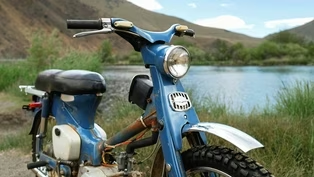
Introduction to "Ridin' Trail"
Video has Closed Captions
Clip: S44 Ep1 | 2m 54s | "Ridin' Trail" explores the origins of the legendary Honda Trail which was invented in Boise, Idaho. (2m 54s)
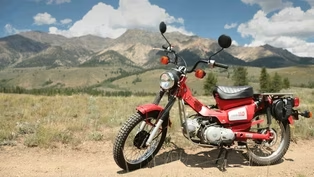
Preview: S44 Ep1 | 30s | "Ridin' Trail" explores the origins of the legendary Honda Trail which was invented in Boise, Idaho. (30s)
Providing Support for PBS.org
Learn Moreabout PBS online sponsorship New Episode
- Science and Nature

Explore scientific discoveries on television's most acclaimed science documentary series.

 New Episode
 New Episode





Support for PBS provided by:
Outdoor Idaho is a local public television program presented by IdahoPTV
Major Funding by the Laura Moore Cunningham Foundation. Additional Funding by the Corporation for Public Broadcasting and the Friends of Idaho Public Television.